Why Solar Panel Prices Vary Worldwide?

Time:2026-09-21 Author:Liam
0%

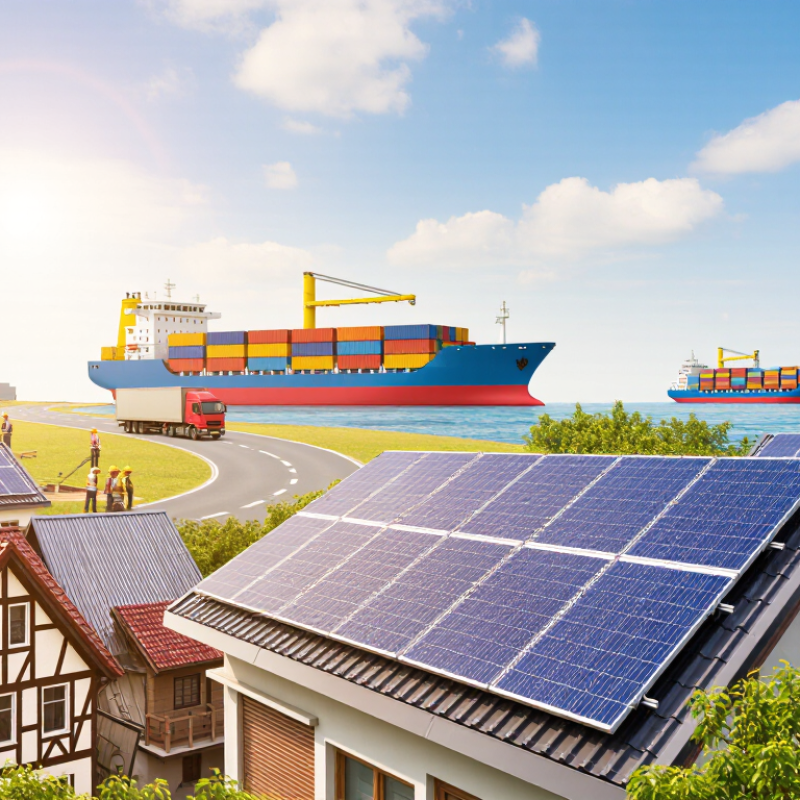
Why do Solar Panel prices vary so widely between countries? The answer involves more than factory production costs. Location matters. Manufacturing scale, raw materials, shipping routes, currency exchange rates, import duties, and local labor can change the final price. A panel leaving a large Asian factory may travel thousands of kilometers before reaching a rooftop in Europe or Africa. Freight insurance, port handling, warehousing, and distributor margins all add cost.

The product itself is only one part of a solar investment. Buyers must also consider inverters, mounting rails, wiring, permits, monitoring equipment, and installation quality. A lower-priced panel may require a higher-cost installer or offer weaker warranty support. Local sunlight, roof design, grid reliability, and financing conditions also influence value. In remote regions, a truck journey over rough roads can cost more than expected. In urban markets, skilled labor and strict building standards may raise installation prices.

Reliable comparisons should use the same system size, efficiency, warranty terms, and labor assumptions. Independent market reports and certified product documents can help buyers check claims. Still, published prices often hide rebates, taxes, and after-sales service costs. Any comparison can mislead. I may also underestimate informal market conditions, especially where pricing changes quickly. A careful evaluation should examine the complete system, not just the label on the Solar Panel. That approach supports clearer decisions and reduces the risk of choosing a cheap system that performs poorly over time.
Why Solar Panel Prices Vary Worldwide?

How Solar Panel Prices Are Formed Across Different Markets

Why Solar Panel Prices Vary Worldwide?

Solar panel prices are formed through several connected layers, not one global rate. Raw silicon, wafers, cells, glass, aluminum frames, and junction boxes create the manufacturing base. Factory scale and production efficiency can lower this cost. Prices move unevenly.

A market quote also reflects shipping distance, port charges, insurance, currency changes, and local labor. A panel delivered to a remote inland project may cost more than one delivered near a major port. Import duties and certification rules can alter the final figure, even when the equipment is identical. Exchange rates matter too. A weak local currency can raise costs within weeks.

Project conditions shape the price further. A rooftop system may require smaller orders, custom mounting parts, and more installation time. Utility-scale projects often secure volume discounts, but they may demand stricter testing, longer warranties, and detailed documentation. Financing costs can also influence the price offered to buyers. A low equipment quote is not always a low project cost. That distinction matters.

Public incentives and local-content policies can support domestic production, while sudden demand or excess inventory can move prices in the opposite direction.

Buyers should compare specifications, degradation rates, warranty terms, delivery conditions, and service responsibilities. A spreadsheet helps, but it can miss delays and quality disputes. Pricing analysis is therefore useful, yet never perfectly clean. Market data can arrive late.

The Main Factors That Cause Solar Panel Prices to Differ

Why Solar Panel Prices Vary Worldwide?

The Main Factors That Cause Solar Panel Prices to Differ

Solar panel prices rarely reflect the panel alone. Manufacturing scale, raw material costs, and factory energy use strongly influence the starting price. Shipping distances also matter. A container traveling thousands of miles adds freight, insurance, and port handling charges. Import duties can raise final prices sharply, while currency changes create additional uncertainty.

Technology creates another clear difference. Higher-efficiency panels usually cost more because they use advanced cells and stricter quality controls. However, a cheaper panel may require more roof space, stronger mounting equipment, or extra installation labor. Local weather also affects product selection. Snow loads, coastal moisture, high temperatures, and heavy winds may require specialized designs and certifications.

Installation remains one of the largest price factors. Skilled labor, electrical permits, roof access, and safety requirements vary by region. In practical project assessments, two similar quotes can hide very different inverter sizes, wiring quality, monitoring tools, and warranty support. Buyers should request an itemized proposal. Look closely.

I have seen price comparisons fail when they focus only on cost per watt. That measure is useful, but incomplete. A low price may exclude structural repairs or future maintenance. A higher quote is not automatically better either. Some estimates include unnecessary features. Local inspection rules and installer experience deserve careful attention. Even experienced buyers can misjudge long-term value.

How Manufacturing Costs Influence Global Solar Panel Prices

Why Solar Panel Prices Vary Worldwide?

Manufacturing costs strongly influence solar panel prices across different markets. Polysilicon, wafer, cell, and module production each add separate expenses. Energy-intensive factories often face higher electricity costs during manufacturing. Labor expenses also matter, although automation reduces their influence in large facilities. A factory producing millions of panels can spread equipment and testing costs more efficiently. Smaller production lines may pay more per unit. That difference appears in final prices.

Shipping adds another layer. Panels may travel thousands of kilometers before reaching a project site. Freight rates, port handling, insurance, and import duties can raise the delivered cost. Local certification requirements may require extra testing or packaging. In my experience reviewing solar quotations, the lowest panel price is not always the lowest project cost. Warranty conditions, expected degradation, and inspection records deserve equal attention. Some quotations hide these details. That can mislead buyers.

Tips: Compare delivered prices, not factory prices. Ask for manufacturing location, test standards, warranty terms, and degradation data. Check whether installation hardware is included. A slightly higher price may reflect stronger quality control. Still, higher cost does not automatically prove better performance. Request evidence. Compare independently.

Why Solar Panel Prices Vary Worldwide? — How Manufacturing Costs Influence Global Solar Panel Prices
Manufacturing Region Indicative 2024 Module Manufacturing Cost
(USD per W, ex-factory)
Indicative 2024 Wholesale Module Price
(USD per W, before local taxes)
Typical Production Advantages Cost Pressures and Price Drivers Estimated Manufacturing-Cost Impact on Final Price
Mainland China $0.13–$0.17/W $0.14–$0.20/W Large-scale integrated production, mature supplier networks, high factory utilization, and strong specialization in polysilicon, wafers, cells, and modules. Electricity prices, polysilicon and silver consumption, freight rates, inventory levels, and intense competition between manufacturers. Low cost base; manufacturing commonly represents about 65%–80% of the pre-tax wholesale module price.
Southeast Asia $0.15–$0.20/W $0.16–$0.23/W Competitive labor costs, expanding module capacity, access to imported upstream materials, and proximity to major shipping routes. Dependence on imported wafers or cells, logistics costs, changing trade policies, financing costs, and varying factory scale. Moderately low cost base; imported intermediate products can add approximately $0.01–$0.04/W.
India $0.18–$0.25/W $0.20–$0.30/W Growing domestic manufacturing capacity, lower labor costs than many developed markets, and policy support for local production. Smaller average production scale, higher financing and logistics costs, imported machinery or materials, and duties on selected inputs. Higher cost base than the lowest-cost global producers; local-content requirements can raise procurement prices.
United States $0.25–$0.38/W $0.28–$0.42/W Policy incentives for domestic manufacturing, advanced automation, strong quality-control systems, and access to a large domestic market. Higher labor, construction, compliance, energy, and financing costs; imported components, tariffs, and comparatively smaller supply-chain depth. Higher manufacturing cost can add roughly $0.08–$0.20/W compared with the lowest-cost production locations.
Europe $0.28–$0.42/W $0.32–$0.48/W Strict quality and sustainability requirements, skilled labor, established engineering capabilities, and shorter delivery distances for regional projects. High industrial electricity prices, labor and environmental compliance costs, limited upstream capacity, and lower economies of scale. Manufacturing costs are often substantially above global-minimum levels; local production may carry a sustainability and supply-security premium.
Australia and Other Developed Import Markets Mostly imported; local assembly varies $0.18–$0.32/W Efficient import infrastructure, strong solar demand, established project developers, and relatively competitive international procurement. Ocean freight, exchange-rate movements, port handling, project volume, certification requirements, and distributor margins. The manufacturing location is usually more important than domestic assembly; logistics and currency can shift prices by approximately $0.02–$0.08/W.
Data note: The figures are indicative 2024 market ranges for mainstream crystalline-silicon modules and are shown for comparison rather than as quotations. Actual prices vary by technology, efficiency, order volume, warranty terms, delivery location, tariffs, exchange rates, and contract timing. The ranges are synthesized from publicly available benchmarks and market reports published by the International Energy Agency Photovoltaic Power Systems Programme, the International Renewable Energy Agency, Fraunhofer Institute for Solar Energy Systems, and the U.S. National Renewable Energy Laboratory.

The Role of Trade Policies, Taxes, and Shipping Expenses

Why Solar Panel Prices Vary Worldwide?

Trade policies can change solar panel prices before products leave the factory. Import duties may apply to panels, cells, frames, or inverters separately. A small classification difference can alter the final bill. Some governments also offer exemptions for renewable energy equipment, while others add protective tariffs. These rules change often, so old price comparisons can mislead buyers.

Taxes create another major gap. Value-added tax may be charged at import, even when the advertised panel price looks attractive. Local sales taxes, customs processing fees, and inspection charges can add several layers. In project estimates, I have seen buyers focus on the factory quote and overlook tax treatment. That shortcut was wrong. Tax refunds may also depend on paperwork, installation status, or local ownership rules.

Shipping expenses are less visible but highly practical. A container moving from a distant port may face ocean freight, insurance, fuel surcharges, and storage fees. Ports with congestion can add days and unexpected handling costs. A panel arriving in a small inland market may travel by truck or rail again. That last journey can matter greatly. Exchange rates create another complication, especially when contracts use foreign currencies. Prices can shift before installation begins. A careful comparison should separate product cost, duties, taxes, transport, and local delivery. Even then, estimates remain imperfect because policies and freight rates rarely stay still.

Why Solar Panel Prices Vary Worldwide?

The role of trade policies, taxes, and shipping expenses in delivered module prices

This public-benchmark model compares indicative delivered crystalline-silicon module prices in 2024. Manufacturing cost is shown separately from trade-policy charges, consumption taxes, and international freight. Tariffs and taxes vary by origin, product classification, exemptions, and local regulations, so the figures are market indicators rather than retail quotations.

Sources: International Energy Agency PVPS, International Renewable Energy Agency, World Bank logistics indicators, European Commission tax information, United States trade-tariff schedules, and India customs-duty schedules.

Why Local Installation Conditions Affect the Final System Price

Solar panel prices vary worldwide, but local installation conditions often shape the final bill more than panel prices. A roof is never just a roof. Its pitch, material, age, and access can change labor requirements quickly. A steep metal roof may need special anchors and extra safety equipment. A fragile tile roof can require careful removal and replacement. Those details add hours, not just materials. In dense neighborhoods, crews may need smaller equipment because trucks cannot reach the building. That inconvenience can raise transport and handling costs.

Sunlight is only part of the site assessment. Nearby trees, chimneys, and taller buildings may create moving shadows across the panels. Installers must study these shadows during different seasons, not only on a clear afternoon. Snow load, coastal salt, strong wind, and high heat also influence mounting choices. Local electrical rules may require upgraded wiring, protective devices, or a new meter. Permit fees and inspection schedules can add delays. A delayed project may create extra labor or temporary storage costs. These costs are easy to miss in an online estimate.

A reliable quotation should show assumptions, measurements, and exclusions. Ask whether it includes scaffolding, roof repairs, permits, wiring, monitoring, and future maintenance access. Photos help, but an on-site inspection is more dependable. Still, no estimate is perfect. Hidden damage may appear beneath old roofing. That is why a careful installer explains possible variations before work begins. Comparing only the equipment price can be misleading. The better comparison is the complete system, adapted to the actual property and local conditions.

FAQS

Why do solar panel prices differ between countries?

Manufacturing costs, shipping distance, taxes, duties, and currency changes affect the final price. Factory scale also matters.

How do manufacturing costs affect panel prices?

Polysilicon, wafers, cells, and modules create separate expenses. Energy use, labor, automation, and testing also change production costs.

Does a larger factory usually offer lower prices?

Often, yes. Large factories spread equipment and testing costs across millions of panels. Smaller lines may cost more per unit.

Why is the factory price different from the delivered price?

Delivered prices may include freight, insurance, port handling, duties, taxes, and local transport. The container still has a long journey.

How do taxes and import duties change solar panel costs?

Duties may apply separately to panels, cells, frames, or inverters. Value-added tax and customs fees can add several charges.

Can shipping costs significantly increase the final project price?

Yes. Ocean freight, fuel surcharges, storage, and inland trucking can raise costs. A delayed port can create extra handling fees.

Is cost per watt enough for comparing solar panels?

No. Cost per watt ignores roof space, mounting needs, installation labor, maintenance, and warranty support. I once compared too narrowly.

Why might a higher-efficiency panel cost more?

It may use advanced cells and stricter quality controls. It can also produce more power from limited roof space.

What should buyers check in a solar quotation?

Request an itemized proposal. Check panel quantities, inverter size, wiring, mounting hardware, permits, warranties, and local delivery.

Does a higher price always mean better quality?

No. A higher quote may include unnecessary features. A low quote may omit repairs or future maintenance. Compare the evidence.

Conclusion

Solar Panel prices vary worldwide because they are shaped by a combination of global production costs and local market conditions. Manufacturing expenses, including raw materials, energy, labor, technology, and factory efficiency, influence the basic cost of each panel. However, the final price is also affected by trade policies, import duties, taxes, currency changes, and shipping expenses. These factors can make the same type of equipment more or less expensive in different countries.

Local installation conditions further increase price differences. Labor rates, roof design, system size, permitting requirements, climate, transportation distance, and the availability of qualified installers all affect the total project cost. In some markets, strong competition and efficient supply chains may reduce prices, while remote locations or complex installation environments can raise them. Understanding these factors helps explain why Solar Panel systems have different prices worldwide, even when they use similar technologies and provide comparable energy benefits.


Liam

Liam

Liam is a dedicated marketing professional with a profound expertise in the industry, where he excels at highlighting the unique advantages of our core products. With a keen understanding of market trends and consumer needs, Liam frequently updates our company’s professional blog, providing......